
Blog
Winter Wetsuit Fit Guide – 7 Points How it Should Feel & Why
Winter Wetsuit Fit Guide – 7 Points On How it Should Feel & Why
Table of Contents
Not What You Expect the First Few Times
A winter wetsuit can feel surprisingly difficult and slightly alarming the first few times you put one on – especially if it’s a proper cold-water suit (for example, 4/3mm, 5/4mm, or thicker). That’s normal. A correctly fitting winter wetsuit is supposed to feel very snug on land.
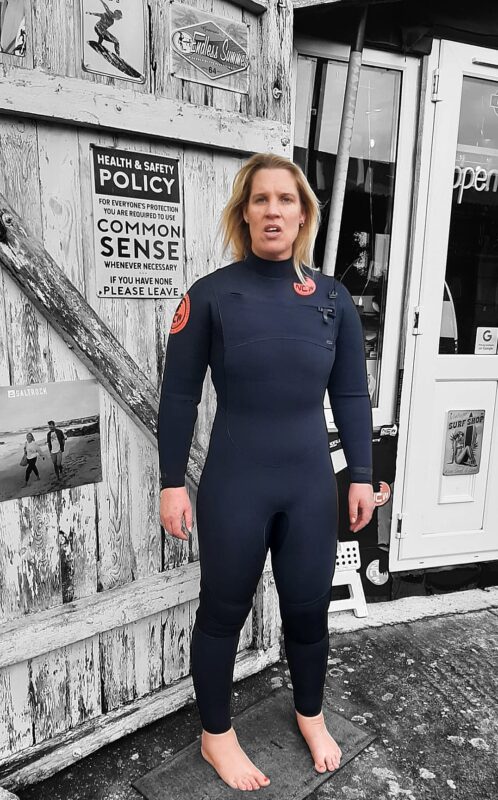

A good winter wetsuit should feel:
- tight but not painful
- like a firm compression garment
- close against the skin everywhere
- with minimal air gaps
- restrictive at first on dry land
- easier once in the water
It should not:
- restrict breathing
- cause numbness
- create sharp pressure points
- or feel impossible to move in
Step-By-Step Winter Wetsuit Fitting
Putting On a Winter Wetsuit: Step-By-Step
A properly fitted winter wetsuit should feel snug — not restrictive. Follow these steps to make getting changed easier, warmer and far more comfortable.
1. Start Completely Dry If Possible
Dry skin grips neoprene less. If you’re damp or sweaty, it gets much harder.
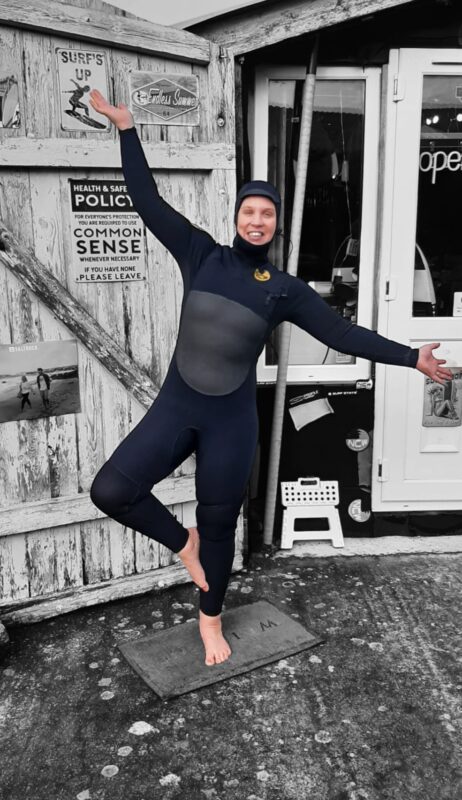
Many people stand on a towel or use a changing mat to keep feet clean and dry while getting changed.
Pro Tip: Changing outside? A dry robe or poncho helps keep wind chill off while getting suited up.
2. Turn The Legs Partially Inside Out
Most people don’t just “step into” a winter suit like normal clothing.
Instead:
- Gather one leg at a time
- Think of it like putting on thick compression leggings or tights
3. Pull Gradually From The Ankles Upward
Important: Don’t yank from the shoulders or chest.
Instead:
- Work small amounts upward
- Move inch by inch
The goal is to get:
- The crotch fully seated
- Knees aligned properly
- No slack in the legs
This part matters hugely.
If the lower half isn’t fully pulled up:
If the lower half isn’t fully pulled up:
- Shoulders feel impossibly tight
- Arms feel wrong
- Neck chokes you
4. Get The Crotch HIGH
This sounds trivial but is critical.
The suit must be pulled fully up into:
- Crotch
- Hips
- Glutes
If not:
- Torso mobility becomes terrible
- Shoulders feel too small
Many beginners stop too early.
5. Insert Arms Carefully
- Feed arm through
- Work neoprene upward gradually
Don’t force fingers through seals aggressively. Winter wrist seals are tight.
6. Arrange Shoulders Before Zipping
Once arms are in:
- Pull neoprene up onto shoulders
- Smooth chest and back panels
- Remove trapped folds
Then zip with your shoulders pushed back (shoulder blades together slightly to narrow your back).
Good To Know: Back-zip suits are often easier for beginners. Chest-zip suits are generally warmer but can feel confusing initially.
When You’re Fully Winter Wetsuit Ready
Once Your Winter Wetsuit Is Fully On
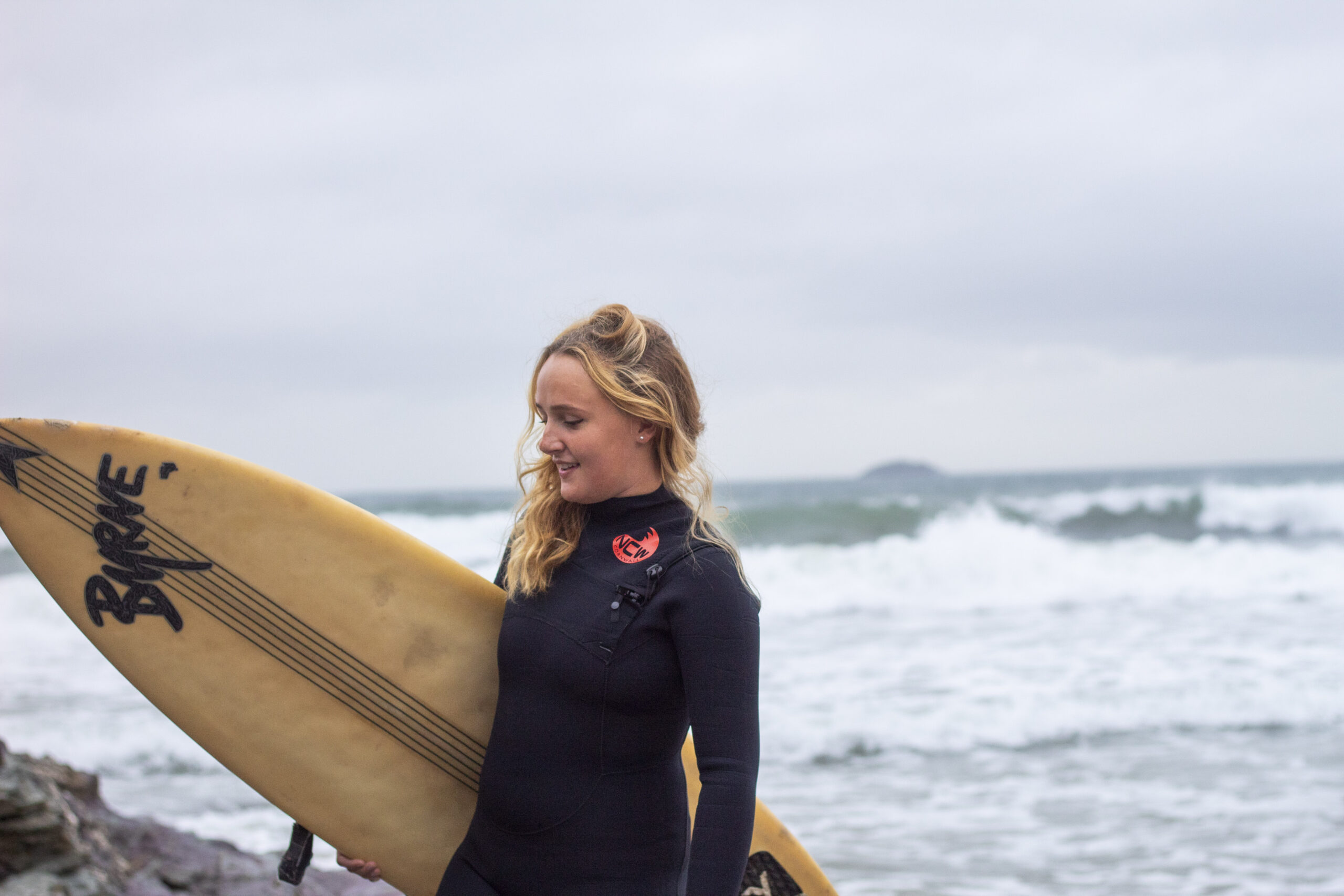
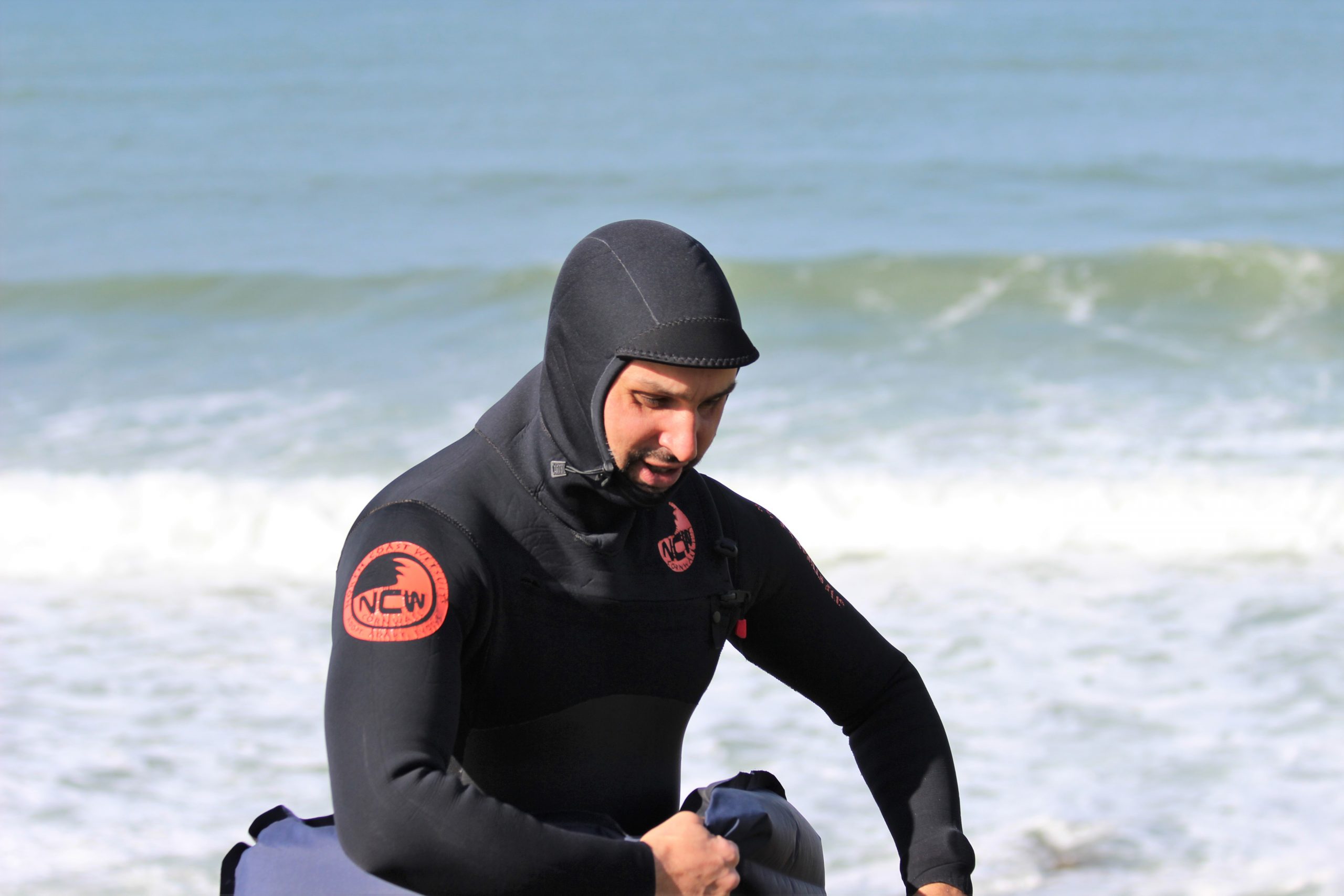
A properly fitting winter wetsuit should feel snug, supportive and warm — even if it feels tighter than expected at first.
What A Winter Wetsuit Should Feel Like
Once fully on, a winter wetsuit often feels:
Tighter than expected
Slightly claustrophobic initially
Warm very quickly
Somewhat restrictive
Many first-time users think:
“This is too small.”
“This is too small.”
But once in cold water:
- Neoprene softens
- The suit relaxes slightly
- Movement improves
Where A Proper Fit Should Feel Snug
A properly fitting winter wetsuit should feel noticeably snug around:
- Lower back
- Chest
- Shoulders
- Thighs
Why snug matters: Small gaps allow cold water flushing, which reduces warmth and overall performance in cold conditions.
Breathing Sensation In A New Winter Wetsuit
A new winter wetsuit can make breathing feel slightly “compressed” at first.
That’s usually normal if mild.
You should still be able to:
- Take full breaths
- Raise your arms
- Squat comfortably
- Paddle or swim normally
If breathing feels genuinely restricted:
- The size may be wrong
- Or the suit may not be fully pulled up correctly
First-Timer Expectation
What First-Timers Should Expect
Getting into a winter wetsuit for the first time can feel unfamiliar — but most of what you experience is completely normal.
It Takes Time Initially
Your first few attempts are rarely quick.
First Few Attempts
10–20 minutes is common.
Experienced Surfers & Watersports Riders
Usually around 2–5 minutes.
Cold Car Parks + Wet Skin
Expect it to take noticeably longer.
Good To Know: Everyone struggles a bit at first. Winter wetsuits are designed for warmth and performance — not quick changing.
You Will Probably Sweat
Winter suits are warm.
Putting one on indoors often gets sweaty surprisingly fast, especially with modern lined neoprene.
That warmth is exactly what you want once outside in cold wind and water.
It Usually Feels Better In The Water
A very common beginner experience is:
“This felt impossible on land but good in the sea.”
That’s because:
- Neoprene loosens slightly
- Buoyancy supports movement
- Water lubricates interior surfaces
Once paddling, swimming or moving around properly, most people adapt very quickly.
Cold Water Entry Shock Is Normal
Even with a winter wetsuit:
Face
Hands
Feet
…can still feel cold initially.
When water first enters the suit:
- You may feel a cold flush
- Then it warms rapidly
That’s exactly how wetsuits work.
Wetsuits do not keep you dry — they trap and warm a thin layer of water next to your body.
Wetsuits do not keep you dry — they trap and warm a thin layer of water next to your body.
Mistakes Beginner Winter Wetsuit Users Make
Common Beginner Mistakes
Most winter wetsuit issues come down to fit, technique or expectations. Avoid these common mistakes and your sessions will feel noticeably better.
Too Much Trapped Air
If there are:
- Big folds in the neoprene
- Ballooning behind the knees
- Excess looseness around the lower back
…the suit is probably too loose or not pulled up properly.
Why this matters:
Excess air gaps allow water to move around inside the suit, reducing warmth and making the wetsuit feel bulky in the water.
Excess air gaps allow water to move around inside the suit, reducing warmth and making the wetsuit feel bulky in the water.
Using Fingernails On Neoprene
One of the easiest ways to damage a wetsuit is pulling aggressively with fingernails.
Avoid
Using fingernails to yank or stretch neoprene panels.
Do Instead
Use fingertips, palms and flat hands to work the suit upward gradually.
Good habit: Take your time. Modern winter neoprene is soft and flexible but can still be damaged by sharp nails.
Assuming “Comfortable In The Shop” Means Correct Fit
A very common beginner misconception is:
“This feels comfortable like normal clothing, so it must fit correctly.”
In reality, a winter wetsuit that feels relaxed and casual on land is often too large.
A properly fitting winter wetsuit should feel:
- Snug throughout the body
- Close around the lower back and shoulders
- Supportive rather than loose
Too much comfort on land often means reduced warmth in cold water.
Helpful Tricks
Plastic bag trick, thin plastic bags over: feet and hands help slide through seals OR we have a proper product called EASY-ON’S to help with this.
You see these here and in the video below.
Especially useful with thick winter suits : Wetsuit lube / diluted conditioner and ome surfers/swimmers use diluted hair conditioner or a specialist wetsuit lubricant (link)
A Good Beginner Expectation to Keep in Mind
For your first proper winter wetsuit:
- first few uses may feel awkward
- getting into it may take 10–15 minutes
- it may initially feel tighter than expected
- once in the water it should feel much more natural
- after a few sessions you’ll become dramatically faster and more comfortable
If you need a hand with wetuit fit, please get in contact with us.
The full range of adults NCW wetsuits can be found here
For kid’s wetsuits and kit, click here